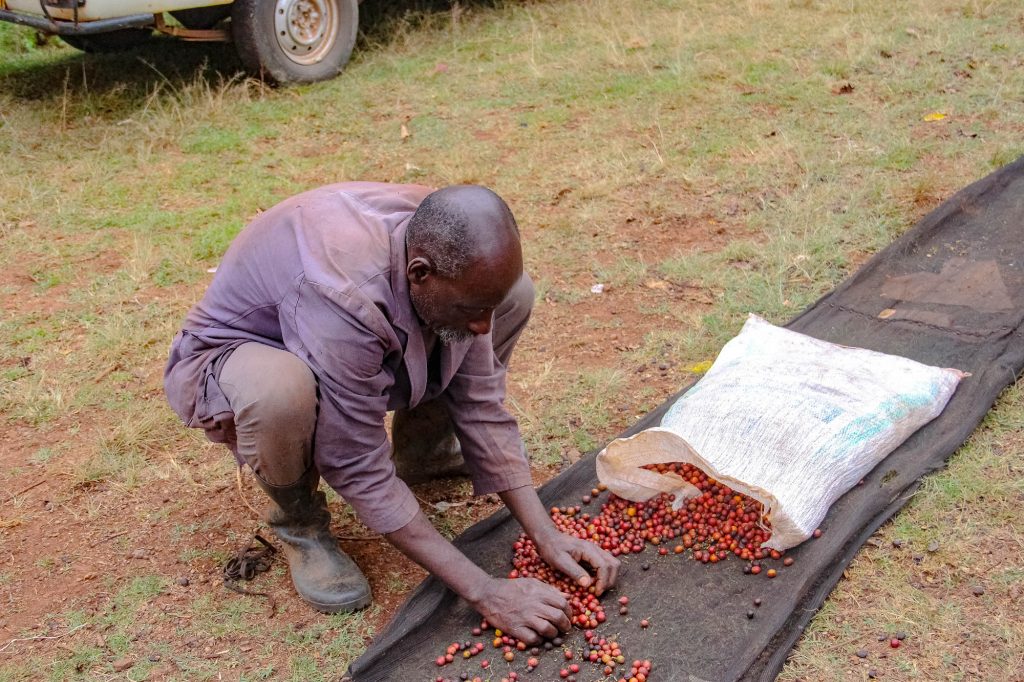
Kenya Nyeri Othaya Ichamama
Description
From our importer:
“Mt. Kenya, at the helm of Kenya’s Central Province, is the second tallest peak on the continent of Africa and a commanding natural presence. The mountain itself is a single point inside a vast and surreal thicket of ascending national forest and active game protection communities. The central counties of Kenya extend from the center of the national park, like six irregular pie slices, with their points meeting at the peak of the mountain. It is along the lower edge of these forests where, in wet, high elevation communities with mineral-rich soil (Mt. Kenya is a stratovolcano) many believe the best coffees in Kenya, often the world, are crafted.
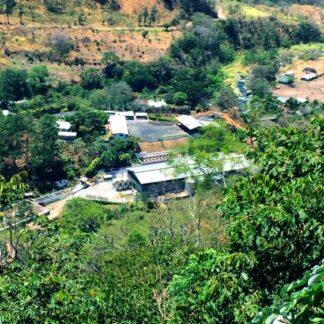
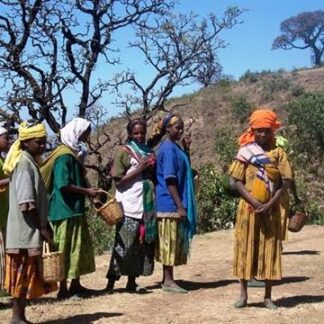
Nyeri is perhaps the most well-known of these central counties. Kenya’s coffee is dominated by a cooperative system of production, whose members vote on representation, marketing and milling contracts for their coffee, as well as profit allocation. Othaya Farmers Cooperative Society, the umbrella organization that includes Ichamama Factory, is one of Kenya’s larger societies, with 19 different factories and more than 14,000 farmer members across the southern Nyeri region.
Othaya Farmer Cooperative Society is one of key member societies of the Kenya Cooperative Coffee Exporters (KCCE) organization. KCCE is an historic organization of almost 4,000 individual cooperatives. The group was formed in 2009, with the express goal of managing marketing and exporting operations cooperatively, as opposed to contractually with third parties. The economics of smallholder systems are consistently difficult everywhere in the world, and in Kenya in particular the number of individual margins sliced off an export price before payment reaches the actual farms is many, leaving only a small percentage to support coffee growth itself. And most often this arrives many months after harvest. KCCE, by managing more of the value chain itself, can capture a greater margin on behalf of the farms. The chairman of Mahiga Factory, another Othaya FCS member, happens to also be one of the founding directors of KCCE—so, the participation of Othaya FCS in farmer-forward infrastructure in Kenya is strong.
Kenya is of course known for some of the most meticulous at-scale processing that can be found anywhere in the world. Bright white parchment, nearly perfectly sorted by density and bulk conditioned at high elevations is the norm, and a matter of pride, even for generations of Kenyan processing managers who prefer drinking Kenya’s tea (abundantly farmed in nearby Muranga county) to its coffee. Ample water supply in the central growing regions has historically allowed factories to wash, and wash, and soak, and wash their coffees again entirely with fresh, cold river water.
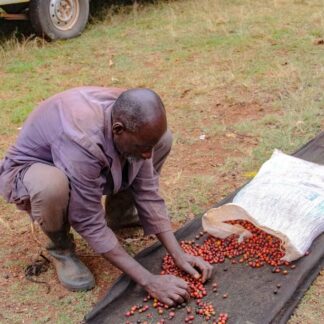
Ichamama typically ferments for 27-35 hours depending on ambient conditions (the changing mountain climate, as for many processors, tends to dictate fermentation temperatures, and processing staff are required to check fermentation progress every three hours). After fermentation, the parchment is rinsed and the water replenished, and the clean parchment soaks for an additional 12 hours, after which it is sorted by density and brought to the tables to dry, typically for two weeks. After drying is complete the coffee is stored on site and eventually delivered to the Othaya dry mill for grading and a final density sort. The established milling and sorting by grade, or bean size, is a longstanding tradition and positions Kenya coffees well for roasters, by tightly controlling the physical preparation and creating a diversity of profiles from a single processing batch. ”
Bright aroma with notes of green apple, caramel, and lemon. Full bodied and creamy with nuances of mango, papaya, almond, caramel, and dark chocolate.
Price range: $14.00 through $27.95